
Now Enrolling Classes in Augusta, GA.
Classes Start October 5th!
Hands-On Learning
Be prepared for your work in the real world with hands-on learning.Career Training
Hands-on classroom and real-world training from passionate teachers.Graduate in as little as 12 Months
A career as an electrician could be yours in as little as 12 months.Request Free Information
We are here to help. Fill out the form and we will contact you to provide information about furthering your education.
Build Hands-On Skills for the Electrical Trades
Electricians help power homes, businesses, schools, healthcare facilities, and industrial operations across Georgia. As construction and infrastructure projects continue throughout the Augusta region and beyond, many employers rely on trained workers who understand electrical systems, safety procedures, troubleshooting, and installation fundamentals.
The Electrical Training Program at Helms College is designed to help students develop practical knowledge and hands-on experience related to the electrical field. Through classroom instruction and lab-based learning, students may gain exposure to residential, commercial, and industrial electrical concepts used in real-world environments.
Whether you are exploring skilled trades for the first time or looking to pursue a new direction, electrical training may provide a pathway toward entry-level opportunities in the electrical industry.
Why Choose Helms College?
Career-Focused Training in Georgia
Helms College has a long history of workforce-focused education designed to help students prepare for career opportunities in growing industries.
Students may benefit from:
- Hands-on instruction
- Career-focused programs
- Supportive learning environments
- Industry-relevant training
- Flexible student support services
Hands On Training Environment
Learn Through Practical Experience
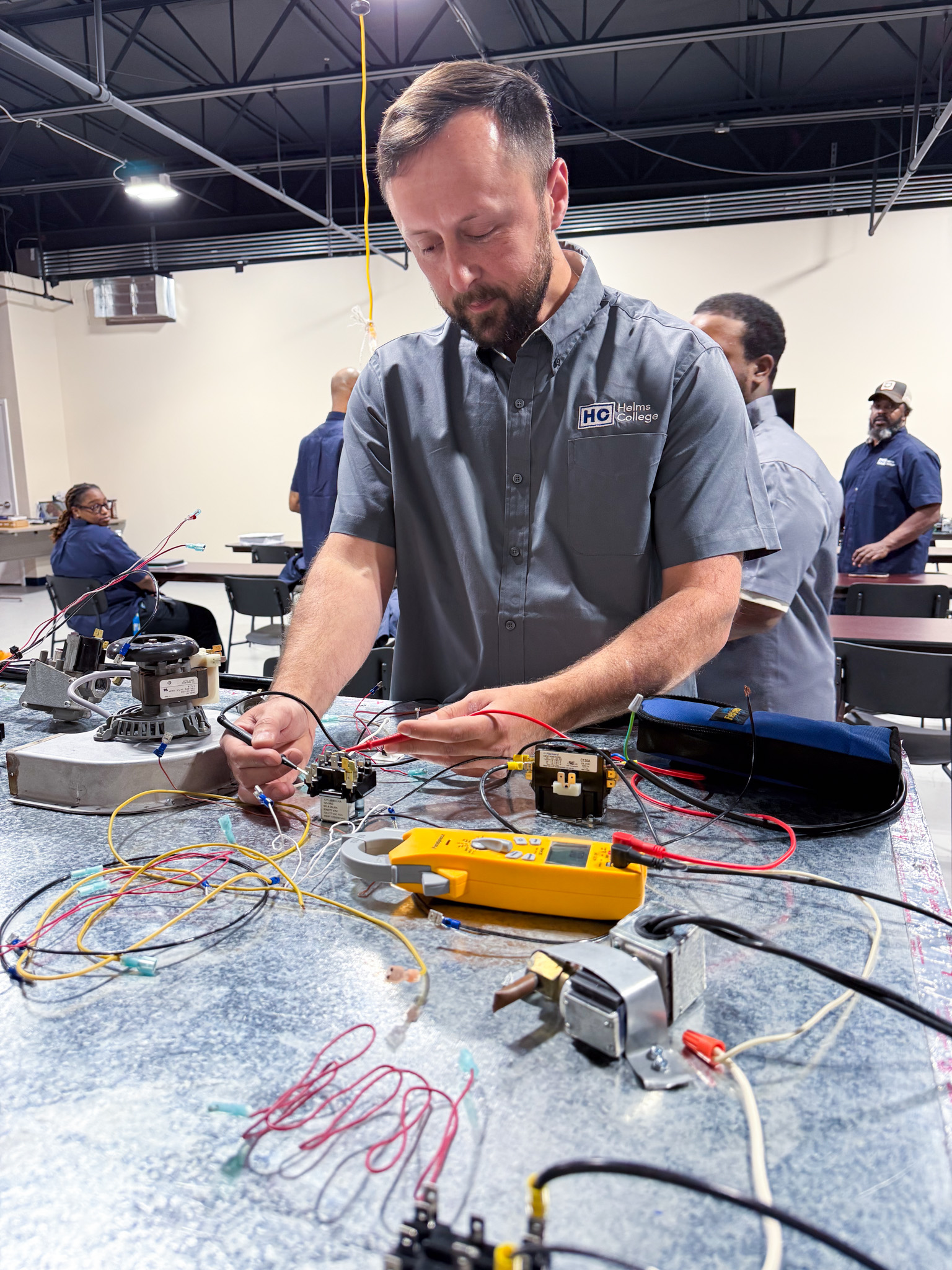
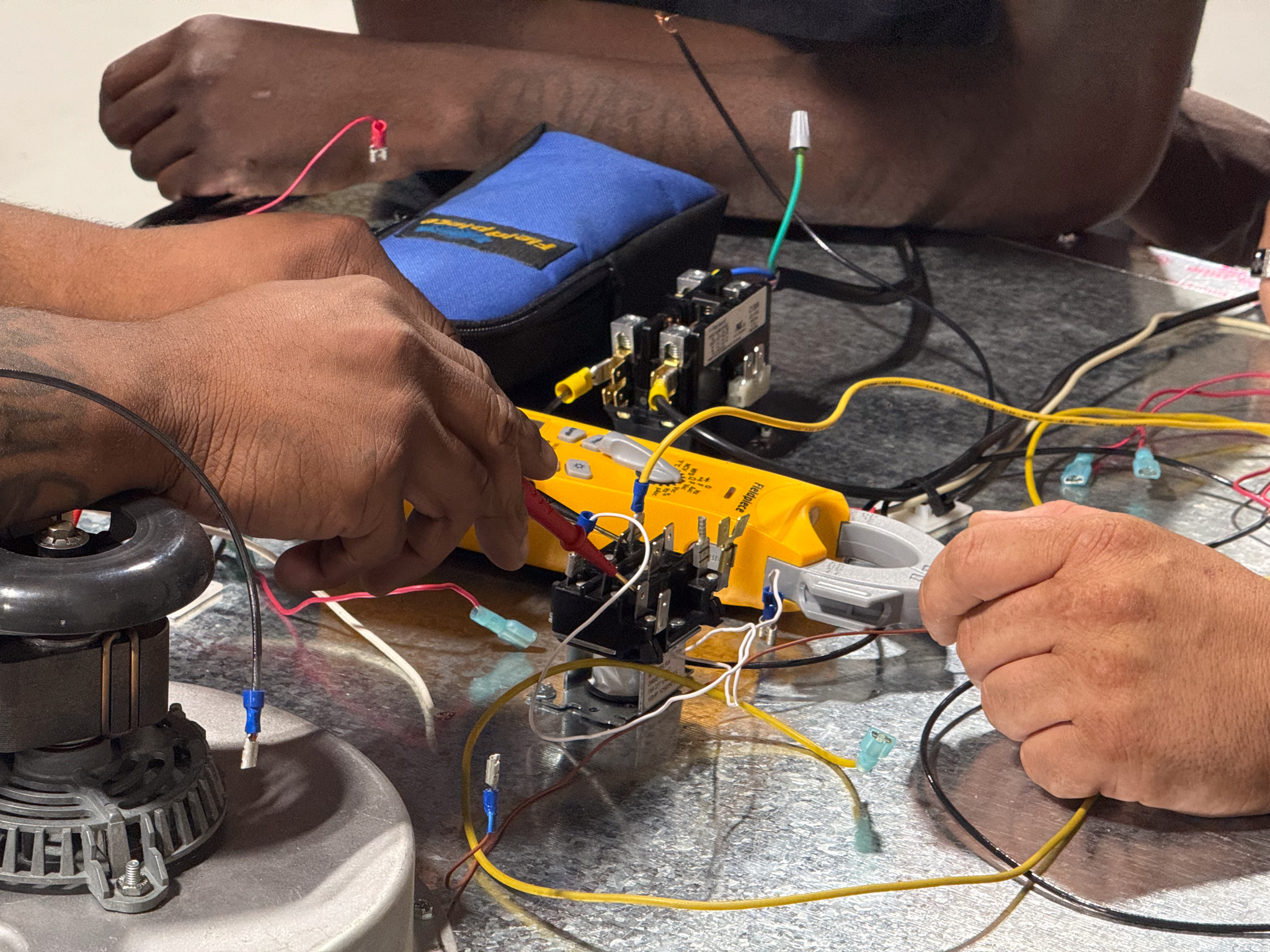
Hands-on learning can play an important role in skilled trades education. Students in the Electrical Training Program may participate in lab activities designed to simulate real-world electrical environments and common workplace scenarios.
Training may include:
- Working with electrical components
- Practicing installation techniques
- Learning proper safety procedures
- Using industry-standard tools
- Understanding electrical measurements and testing
Why Consider Electrical Training?
Skilled Trades Careers Continue to Grow in Georgia
Across Georgia, electricians support new construction projects, manufacturing facilities, healthcare systems, logistics centers, military infrastructure, and residential communities. Skilled trades careers continue to attract people who enjoy practical, hands-on work and want to learn skills that can be applied in many industries.
Students pursuing electrical training often appreciate:
- Hands-on learning environments
- Problem-solving and troubleshooting work
- Opportunities to work indoors and outdoors
- Potential career pathways through apprenticeships
- Skills that support residential, commercial, and industrial projects
- Career-focused training instead of a traditional four-year college route
Who May Be a Good Fit for Electrical Training?
Students interested in electrical careers often enjoy:
- Working with their hands
- Solving technical problems
- Understanding how systems work
- Learning practical skills
- Active work environments
- Construction and building projects
- Mechanical or technical tasks
No prior electrical experience may be required to begin training.
What You Will Learn
Electrical Skills and Industry Fundamentals
The Electrical Training Program may introduce students to foundational concepts used in the electrical field, including:
- Electrical safety procedures
- Basic circuitry and wiring
- Electrical tools and equipment
- Blueprint and schematic reading
- Conduit bending and installation
- Residential electrical systems
- Commercial electrical concepts
- Electrical code fundamentals
- Troubleshooting techniques
- Electrical theory basics
- Jobsite professionalism and communication
Program curriculum and course offerings may change.
Potential Electrical Careers
What Can You Do After Electrical Training?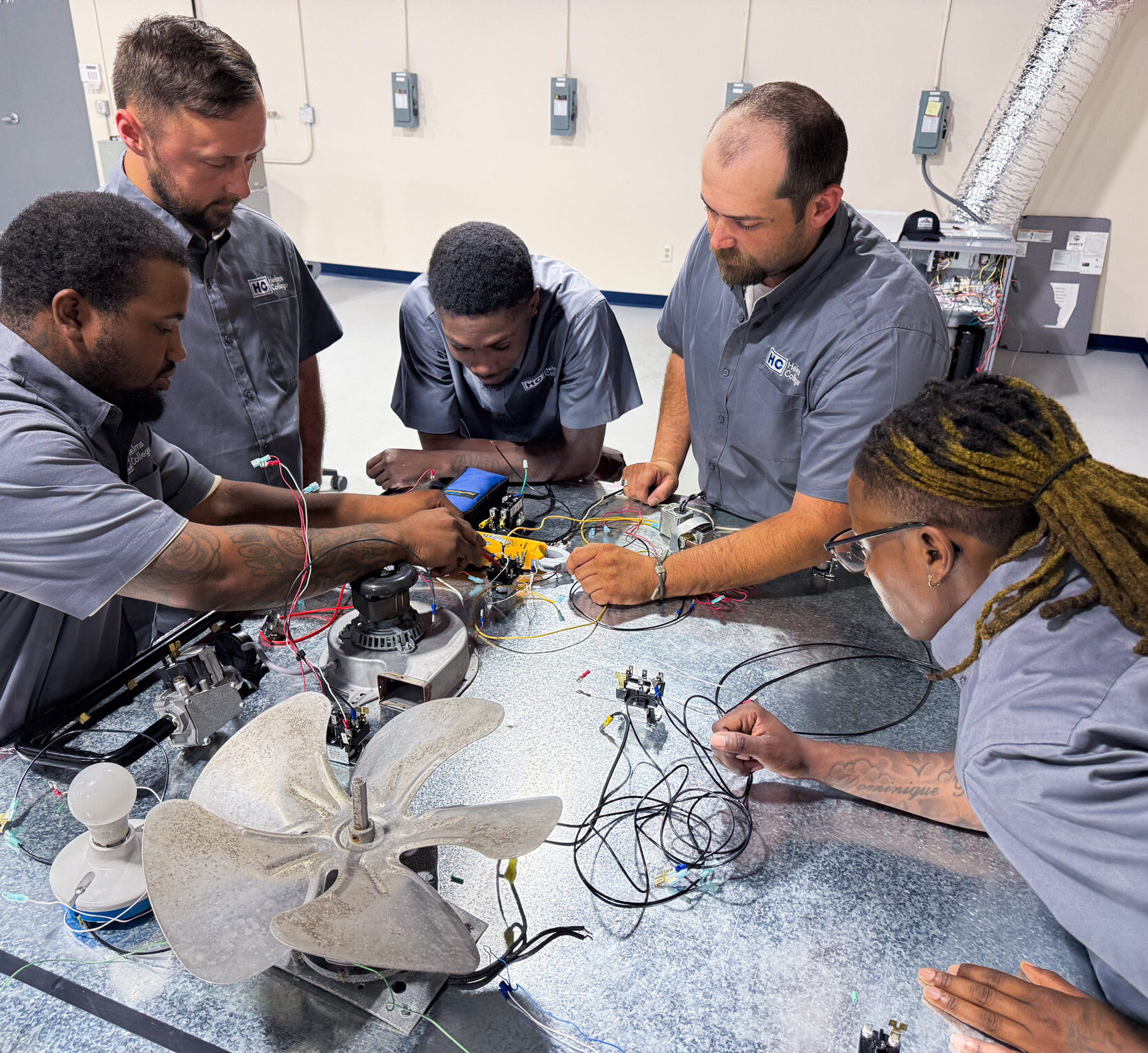
Electrical Technician
Supports the installation, maintenance, testing, and troubleshooting of electrical systems and components.Electrical Installation Technician
Assists with installing wiring, fixtures, panels, and other electrical components in residential or commercial settings.Electrical Apprentice
Begins supervised, on-the-job training while continuing to build the skills and experience needed for a career in the electrical trade.Frequently Asked Questions
How long is the Electrical Training Program at Helms College?
The Electrical Training Program is 12 months.
Is the Electrical Training Program hands-on?
Students may participate in lab-based activities designed to help reinforce classroom instruction and introduce real-world electrical concepts.
Do I need prior electrical experience?
Many electrical training programs are designed for beginners entering the skilled trades for the first time.
Can electrical training help prepare students for apprenticeships?
Electrical training may help students build foundational knowledge and practical skills that can support future apprenticeship opportunities.
What is the difference between an apprentice electrician and a licensed electrician?
Apprentice electricians typically work under the supervision of experienced electricians while gaining hands-on experience and completing licensing requirements.
What kinds of skills are taught in electrical training?
Students may learn safety procedures, wiring concepts, blueprint reading, circuitry basics, troubleshooting, and electrical installation techniques.
Is there demand for electricians in Georgia?
Electricians continue to support residential, commercial, industrial, and infrastructure projects throughout Georgia.
Projected growth for electrician helpers in Georgia is 7% between 2022-2032, which is higher than the national average.
Projected growth for Electrical Technicians in Georgia is 14% between 2022-2032, which is much higher than the national average.
Classes Start:
Ready to Get Started?
Take the next steps in an exciting career in the electrical field.
Get in contact with one of our admissions representatives to learn about financial aid and resources, enrollment dates, and your next steps in starting at Helms College.